What a Bin Pad Tells Visitors Before They Walk In
Visitors may never go near the dumpster, but they still read the property by what they can see of it.
October 17, 2026 · 4 min read
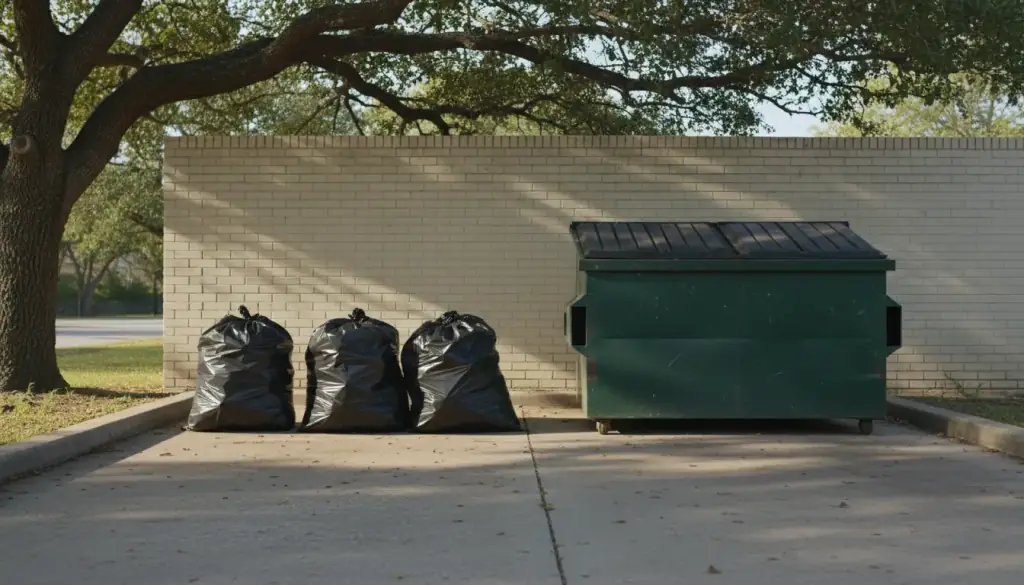
Visitors form an opinion of a property well before they reach the front door, and the bin pad is part of that opinion whether anyone planned it that way or not. It sits near the edge of the lot, often in view of the entrance, the neighboring business or the road. When it is tidy, nobody mentions it. When it is not, it is the first thing people notice and the last thing they forget.
What an overflowing pad says
An overflowing dumpster tells a visitor that something upstream is not working. Maybe pickups are not frequent enough for the volume, maybe the container is too small, maybe somebody is dumping bags beside it because the lid is stuck. The visitor does not know which. They only see that waste is outrunning the system, and they quietly wonder what else is being missed inside the building.
Bags stacked on the ground are a particular signal. They say the container filled up and people kept going anyway. They also invite animals and wind. Raccoons and birds tear into loose bags, and what comes out spreads across the pad, onto the pavement and into the nearest planting bed.
Why bin pads get messy
Most bin pad problems come from a few ordinary causes. Lids that do not close, because the container is overfilled or a hinge has failed. Loose cardboard that was never flattened and takes up three times the room it should. Small bags tossed toward the container instead of into it. Liquids that leak from bags and leave stains, and stains that leave odors on a warm Savannah afternoon.
Heat and humidity matter here. In a coastal climate, wet waste sours quickly, and a pad that is merely untidy in March can smell by July. Summer storms push water through the enclosure, carry light trash out through the gate gap, and leave puddles that stay for days. A pad that was fine before the weather can look neglected after it.
The enclosure counts too
Many properties screen the dumpster with a fence or masonry enclosure, and that screen is part of the picture. A gate hanging open, a latch tied shut with a rope, or panels covered in scuffs and sticky residue draw as much attention as the bin itself. Weeds growing along the base and leaf litter packed behind the container suggest nobody looks back there. The enclosure is meant to hide the mess, and when it is in poor shape it points straight at it.
Small habits that keep a pad presentable
A bin pad does not need a big project to stay in good shape. It needs a few habits that happen on a steady schedule:
- Keep the lids closed and the gate latched so loose waste has no easy way out.
- Flatten cardboard before it goes in, and break down boxes beside the container rather than stacking them on top.
- Walk the pad at the start of the day and pick up anything that escaped overnight.
- Check the ground around the pad, including the nearest curb and planting bed, for blown-out items.
- Look for stains, leaks and standing water, and deal with them before they set.
None of these steps is hard. The difficulty is that they have to happen repeatedly, and they fall to whoever is nearest the pad on a busy day. When nobody owns the job, the pad drifts. A cluttered pad then becomes the excuse for the next bag left on the ground, because a space that already looks messy gives people permission to add to it.
Pads rarely stay out of sight
It is easy to assume the bin pad is out of view. Delivery drivers see it. Neighbors and tenants of adjacent properties see it. Customers pass it on the way from their cars. Anyone glancing at the property from the road forms a quick impression from it, and that impression carries over to everything else on the site. A pad that looks managed suggests a property that is managed.
There is a practical side as well. A pad that stays clear is easier for the hauler to service, easier to walk around, and less likely to send trash drifting across the lot. Money spent keeping it tidy saves effort in the rest of the property, because the pad is one of the main places litter starts.
If the pad has already slipped, the order of work matters. First remove what does not belong: loose bags, dumped items and bulky material that should have been hauled off. Then pick up the small litter around the pad and along the nearest fence and curb. Last, look at the surfaces, the gate and the edges, since those are what make the area look cared for once the trash is gone.
If cleaning up around a bin pad keeps slipping down the list, Property Treated Properly can help. It is a Savannah company focused on litter cleanup, trash removal and exterior property maintenance. Call 912-225-4576 to talk through what your pad area needs.
Property Treated Properly, 912-225-4576
Call 912-225-4576More articles
Where Litter Collects on a Commercial Lot, and Why It Keeps Coming Back
Wind, foot traffic and idling cars move trash in predictable ways, which means you can predict where to look.
Storm Drains, Curbs and What Blows In From the Street
The edge of a property is where the street's debris arrives, and it is also where drains can quietly clog.