Where Litter Collects on a Commercial Lot, and Why It Keeps Coming Back
Wind, foot traffic and idling cars move trash in predictable ways, which means you can predict where to look.
October 17, 2026 · 4 min read
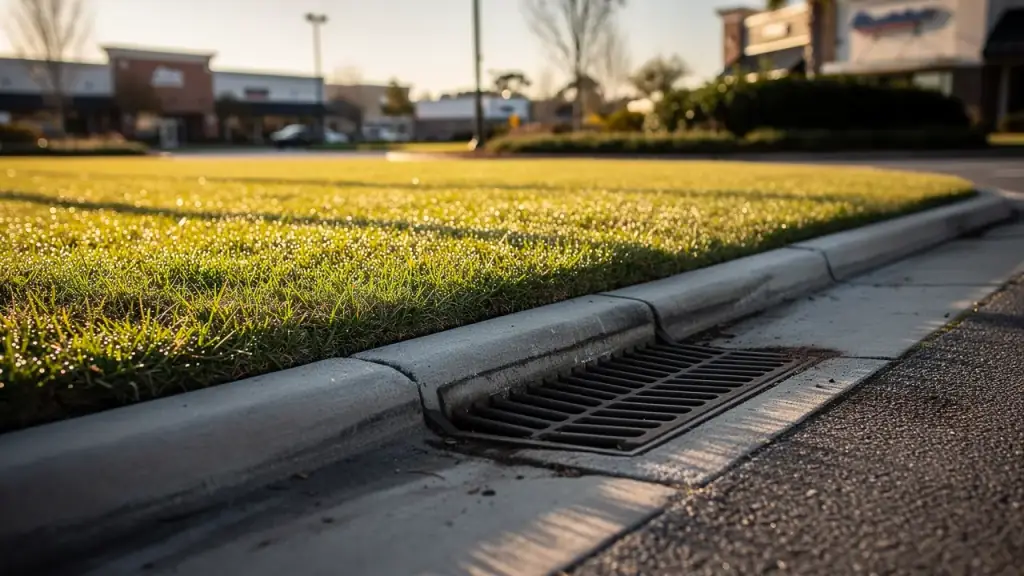
Walk a commercial lot slowly, the way a first-time visitor would, and you will notice that litter is rarely spread evenly. It gathers in the same handful of places, visit after visit, because wind, foot traffic and drivers all behave in predictable ways. Once you know where trash collects, you can check those spots first and keep the whole property looking cared for without guessing. This piece walks through the places litter tends to settle and why each one does it.
Edges and corners catch whatever moves
Wind is the great sorter of loose litter. Cups, bags, flyers and scraps of packaging travel across open pavement until something stops them, and that something is usually a curb line, a fence, the base of a wall or the corner where two buildings meet. A lot that looks clean from the driver's seat can have a drift of paper and plastic tucked into a back corner, simply because nothing ever pushed it anywhere else. The longer it sits, the more it traps: one bag becomes a small pile, and a small pile becomes the place everyone else's trash ends up.
Chain link and wire fencing are especially good at this. Light trash presses against the mesh and stays there, and it takes a deliberate walk along the fence line to see it all. Savannah's summer storms make the pattern stronger. A squall can move everything loose across a lot in a few minutes and leave it stacked wherever the gusts ran out of room, so the morning after a storm is a good time to walk the edges.
Where people pause, litter follows
People drop things where they stop. The front door, the bench beside it, the bus stop at the property line, the spot where smokers gather, the ledge where somebody set down a drink and forgot it: these are the places where cigarette butts, drink lids and wrappers collect. The habit is tied to the pause rather than to any one person, which is why the same corner can be clean at closing time and littered again the next afternoon.
Look at where vehicles idle too. Drive-up windows, loading zones and the first row of parking nearest the entrance all see quick stops, open windows and fast-food bags. A short walk through each of those zones tells you more than a glance at the whole lot ever will.
The dumpster area is its own hotspot
Anywhere waste is handled is a place where waste escapes. Lids left open, bags set beside a full container, boxes that never got flattened: all of it lifts off in a breeze and ends up in the lot. A small amount spilling from the bin pad can spread across the property by afternoon, and the spill tends to land on the downwind side, which is often the side customers walk. Another article on this site looks closer at what a bin pad tells people before they ever reach your door.
Landscaping hides more than you expect
Shrubs, ornamental grasses and planting beds are natural traps. Litter slides under low branches and sits in the shade where no one looks. Around Savannah, live oaks and Spanish moss add their own natural debris to the mix, and that debris covers bottles and wrappers well. Dense planting along the edge of a lot can hold a long stretch of buildup before anyone notices, and a bag that is half buried in a bed is much harder to pull out than one picked up the day it landed.
A simple walking route that finds most of it
You do not need a special tool to check a lot. You need a route, and you need to use the same one each time so you can see what changed. A reasonable order looks like this:
- Start at the entrance and look along the curb lines on both sides.
- Walk the fence or property line, checking the base where trash presses against it.
- Look at the foot of every sign, light pole and bollard.
- Check under the first few feet of shrubs and into the planting beds.
- Finish at the dumpster area and the nearest storm drain.
The point of repeating the route is comparison. After a few walks you learn which spots refill first, and those become the places to check between full cleanups. Some properties find that one corner needs attention far more often than the rest of the lot combined. That is useful information, because it points to something about the layout, such as a gap in a fence or a wind tunnel between two buildings, rather than to carelessness.
It is also worth looking at the lot at different times of day. Early morning shows what the night left behind. Late afternoon shows what the day's traffic dropped. Neither view alone is complete.
Keeping up with all of this takes steady attention, and plenty of property owners and managers would rather hand it off than add it to someone's list. Property Treated Properly is a Savannah company focused on exterior property maintenance, with litter cleanup and trash removal at the center of its work. If you want a second pair of eyes on where litter collects at your property, call 912-225-4576.
Property Treated Properly, 912-225-4576
Call 912-225-4576More articles
What a Bin Pad Tells Visitors Before They Walk In
Visitors may never go near the dumpster, but they still read the property by what they can see of it.
Storm Drains, Curbs and What Blows In From the Street
The edge of a property is where the street's debris arrives, and it is also where drains can quietly clog.